
Description
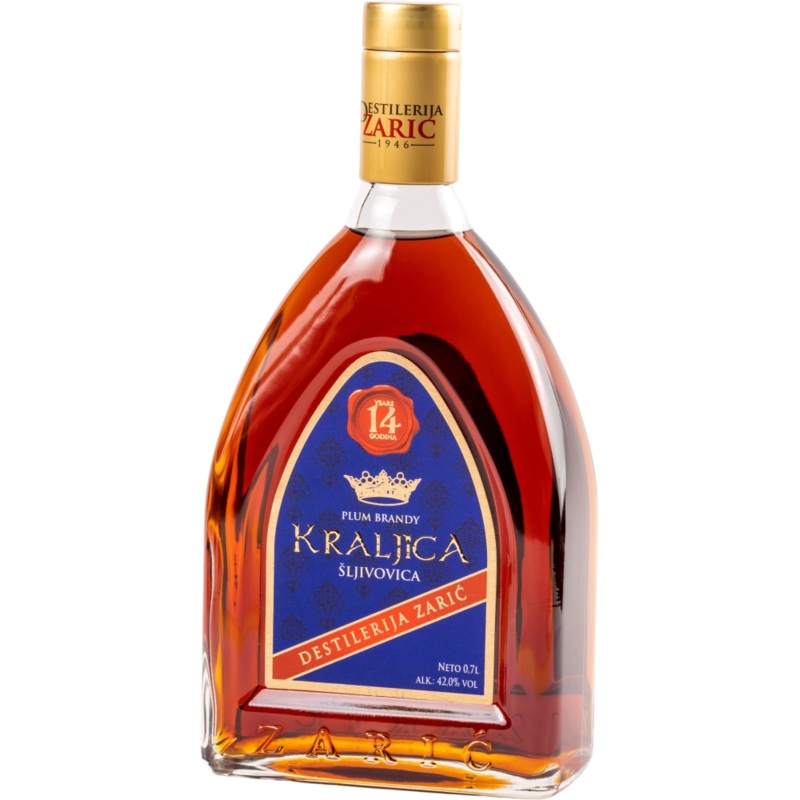
Zaric King Slivovitz 700ML is a double-distilled Serbian plum brandy produced from heritage damson plum varieties in a 700ml bottle at 40% ABV. What distinguishes this expression is its provenance: three specific plum cultivarsTrnovaca, Poegaa, and Crvena Rankagrown on the sun-drenched hillsides surrounding Kosjeri in central Serbia, then distilled in traditional copper pot stills at Destilerija Zari, Serbia’s largest fruit brandy production facility.
Quick Facts: ABV: 40% | Origin: Kosjeri, Central Serbia | Style: Double-Distilled Plum Brandy (ljivovica) | Distillery: Destilerija Zari
Production & Heritage
Destilerija Zari operates out of Kosjeri, a town in western-central Serbia long associated with plum orcharding and traditional rakija production. The distillery holds the largest fruit brandy production capacity in Serbia, combining modern technology with time-honored methods. Zaric King Slivovitz is double-distilled in copper pot stillsa process that strips harsh congeners while preserving the aromatic intensity of the plum fruit. The use of three distinct cultivars (Trnovaca, Poegaa, and Crvena Ranka) is notable; each variety contributes a different dimensionPoegaa brings classic plum sweetness, Crvena Ranka adds tartness and depth, and Trnovaca provides aromatic complexity. Only fully ripe fruit is selected, ensuring maximum sugar content for fermentation and a spirit that carries genuine fruit character into the glass.
Tasting Notes
Aroma: Ripe damson plum dominates immediately on the nose, followed by subtle stone-fruit kernel notes and a faint earthy undertone. A second pass reveals dried orchard fruit and a whisper of almond from the plum pits, a hallmark of traditionally distilled slivovitz.
Taste: The palate opens with bright, concentrated plum sweetness that reads as genuine fruit rather than sugary artifice. Mid-palate, the texture broadens into a medium-bodied spirit with a slight oiliness characteristic of copper pot distillation. Dried fruit and a gentle nuttiness emerge toward the peak, balanced by clean fruit acidity that keeps everything structured.
Finish: Medium in length, with lingering plum skin bitterness and a warm, peppery fade. The aftertaste circles back to stone fruit and a clean, dry close that invites the next sip.
How to Drink Zaric King
Slivovitz is traditionally served neat at room temperature, and Zaric King rewards that approachthe fruit complexity reveals itself most fully without dilution. A single ice cube can tame the pepper on warmer days without drowning the plum character. For cocktails, this brandy’s bright acidity and fruit-forward profile make it a versatile base: try it in a Slivovitz Sour (lemon juice, simple syrup, egg white) where the plum sweetness replaces the need for heavy sweetening; in a Plum Old Fashioned with a demerara sugar cube and Angostura bitters, which amplifies the dried-fruit and spice notes; or in a Balkan Spritz with sparkling water and a twist of lemon peel for a lighter, sessionable serve.
Best For
- Introducing friends to Eastern European fruit brandy traditions
- After-dinner sipping alongside a cheese course or dark chocolate
- Gifting someone with Serbian or Balkan heritage
- Building a world spirits collection beyond whisky and tequila
Frequently Asked Questions
What does Zaric King taste like? Zaric King Slivovitz leads with concentrated ripe plum sweetness, followed by dried fruit, gentle almond nuttiness, and a warm peppery finish balanced by natural fruit acidity.
How does Zaric King compare to Navip Slivovitz? Navip’s Serbian slivovitz is bottled at a higher 50% ABV with a heavier body and more pronounced sweetness, while Zaric King delivers a cleaner, more fruit-forward profile at a more approachable 40% ABV. The difference in proof alone makes Zaric King more accessible for sipping neat.
Is Zaric King good for sipping neat? Yesneat service at room temperature is the traditional and recommended way to drink slivovitz, and Zaric King’s moderate proof and fruit-driven character make it well-suited to that approach.
Where is Zaric King made? Zaric King Slivovitz is produced at Destilerija Zari in Kosjeri, a town in central Serbia surrounded by plum-growing hillsides. The distillery is the largest fruit brandy production facility in Serbia.
What foods pair well with Zaric King? Aged sheep’s milk cheese (like Serbian kajmak or Manchego) complements the fruit and nuttiness. Dark chocolate (70%+ cacao) mirrors the dried-fruit notes. Roasted walnuts echo the almond-kernel character. Grilled lamb or pork pairs well with the peppery finish. Fresh stone fruitplums, apricots, or cherriescreates a natural seasonal pairing.
What sizes does Zaric King come in? Zaric King Slivovitz is available in the standard 700ml bottle format.
Is Zaric King worth the price? Zaric King positions as a mid-range expression within the slivovitz category, offering copper pot double-distillation and a three-cultivar plum blend that many budget slivovitz brands do not match. For the quality of production and fruit sourcing, it represents solid value in the fruit brandy segment.
Why Zaric King?
What earns Zaric King its place in the slivovitz category is the specificity of its production. Rather than relying on a single generic plum variety, Destilerija Zari blends three heritage cultivarsTrnovaca, Poegaa, and Crvena Rankaeach selected for what it contributes to the final spirit. The copper pot double-distillation at Serbia’s largest fruit brandy facility ensures consistency and purity at scale without sacrificing artisanal character. For drinkers exploring Eastern European fruit brandies, or for those already familiar with the category seeking a clean, fruit-expressive benchmark, Zaric King delivers a credible and well-made slivovitz that honors the tradition without relying on novelty.
Reviews
There are no reviews yet.