
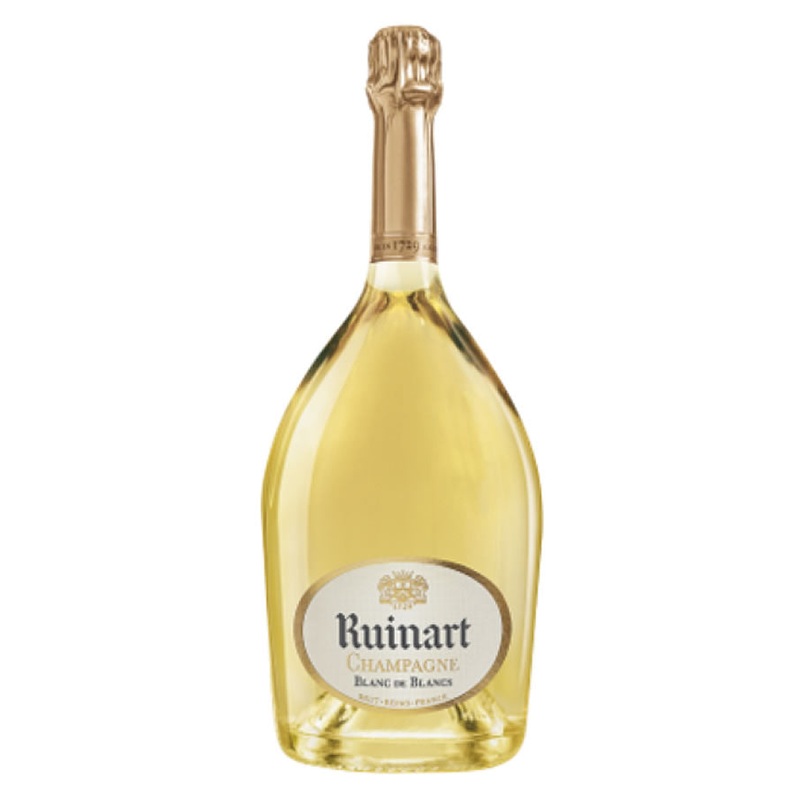
Description
Ruinart Blanc de Blancs Brut is a 100% Chardonnay Champagne produced by the oldest established Champagne house, bottled at 12.5% ABV in a standard 750ml format. This non-vintage cuve earned 93 points from both Wine Spectator and James Suckling, along with Gold medals from Mundus Vini and The Champagne & Sparkling Wine World Championships consistent recognition that underscores its standing among elite blanc de blancs bottlings.
Quick Facts: ABV: 12.5% | Origin: Champagne, France | Style: Blanc de Blancs, Non-Vintage | Producer: Maison Ruinart (est. 1729)
Production & Heritage
Founded in 1729 by Nicolas Ruinart, Maison Ruinart holds the distinction of being the first established Champagne house, predating even Mot by nearly two decades. The Blanc de Blancs is vinified entirely from Chardonnay sourced primarily from the Cte des Blancs and Montagne de Reims, fermented in stainless steel tanks with 2030% reserve wines blended in for depth and consistency. After secondary fermentation via Mthode Champenoise, the wine ages for two to three years in Ruinart’s historic crayres Gallo-Roman chalk quarries maintained at a constant 1012C providing ideal humidity and darkness that allow the mousse to develop exceptional finesse.
Tasting Notes
Aroma: The nose opens with cool, mineral-driven notes of lime zest and chalk before warming into riper suggestions of yellow apple, Anjou pear, and white peach. Delicate white flower aromatics jasmine and acacia weave through a subtle brioche undertone that signals the influence of extended lees aging.
Taste: On entry, a creamy mousse carries concentrated flavors of honeyed apricot and Meyer lemon peel across the palate. The mid-palate broadens into almond pastry and lemon curd, balanced by moderately tangy acidity that keeps the wine taut and focused. A luxurious texture emerges without heaviness, reflecting the purity of the Chardonnay fruit.
Finish: The finish is medium-long and refined, trailing off with hints of chalk, soft smoke, and baking spice. Vanilla and citrus peel linger cleanly, inviting the next sip without fatigue.
How to Drink Ruinart Blanc de Blancs
This Champagne shows its full aromatic range when served chilled to around 810C in a tulip-shaped glass rather than a traditional flute, allowing the complex bouquet room to develop. It also performs remarkably well in cocktails where Chardonnay-driven elegance is an asset. A French 75 benefits from its citrus brightness and fine mousse, providing structure beneath the gin and lemon. A Champagne Cocktail (sugar cube, Angostura, lemon twist) gains sophistication from the wine’s chalk minerality and almond pastry depth. A Kir Royale made with crme de cassis pairs naturally with the Blanc de Blancs’ white fruit and acidity, creating a balanced, layered aperitif.
Best For
- Hosting an elegant dinner party where a single Champagne needs to carry from aperitif through seafood courses
- Gifting to a wine enthusiast who appreciates the heritage of the oldest Champagne house
- Celebrating milestones such as anniversaries or promotions with a prestige-level cuve
- Building a Champagne collection that represents benchmark blanc de blancs style
Frequently Asked Questions
What does Ruinart Blanc de Blancs taste like? It delivers a concentrated palate of honeyed apricot, Meyer lemon peel, almond pastry, and lemon curd, supported by a creamy mousse and tangy acidity. The mineral-chalk backbone and subtle brioche notes distinguish it as a textbook blanc de blancs.
How does Ruinart Blanc de Blancs compare to Dom Prignon? Dom Prignon is a vintage-dated prestige cuve blending Chardonnay and Pinot Noir at a significantly higher price tier, while Ruinart Blanc de Blancs is a non-vintage, 100% Chardonnay expression that emphasizes pure citrus and mineral elegance over the broader complexity of a blended vintage Champagne. Both houses are frequently mentioned together at the top of the prestige category, though they represent distinct stylistic approaches.
Is Ruinart Blanc de Blancs good for sipping neat? Absolutely its balance of creamy texture, bright acidity, and layered fruit makes it one of the more rewarding blanc de blancs Champagnes to drink on its own, especially when served at the proper 810C temperature range.
Where is Ruinart Blanc de Blancs made? It is produced by Maison Ruinart in Reims, in the heart of France’s Champagne region, using Chardonnay sourced primarily from the Cte des Blancs and Montagne de Reims sub-regions. The wine ages in the house’s famed crayres, ancient chalk cellars dating to the Gallo-Roman era.
What foods pair well with Ruinart Blanc de Blancs? Fresh oysters and raw shellfish mirror the wine’s chalk minerality. Seared scallops with citrus beurre blanc complement its creamy texture and lemon notes. Aged Comt or Gruyre echo the subtle nuttiness on the palate. Smoked salmon draws out the wine’s delicate brioche character. Lemon tart makes a natural dessert pairing, matching the curd and pastry flavors in the wine itself.
What sizes does Ruinart Blanc de Blancs come in? The standard bottling is 750ml, and Ruinart also produces this cuve in 375ml half-bottles and 1.5L magnums, depending on market availability.
Is Ruinart Blanc de Blancs worth the price? It positions as a premium non-vintage Champagne, sitting above everyday NV bruts but below prestige vintage cuves like Dom Ruinart. With dual 93-point scores and Gold medals from international competitions, it represents strong critical validation within its price tier.
Why Ruinart Blanc de Blancs?
Few Champagne houses can claim nearly three centuries of uninterrupted production, and fewer still devote that heritage so singularly to Chardonnay. Ruinart’s crayres among the first chalk quarries repurposed for wine aging provide a maturation environment that no modern cellar can replicate, contributing the distinctive mineral signature that runs through every bottle. The 93-point scores from Wine Spectator and James Suckling, alongside Gold medals from Mundus Vini and The Champagne & Sparkling Wine World Championships, confirm this is not merely a legacy play but a genuinely accomplished blanc de blancs. For drinkers who value finesse over power and chalk-driven precision over yeasty richness, this remains one of the benchmarks in its category.
Reviews
There are no reviews yet.