
Description
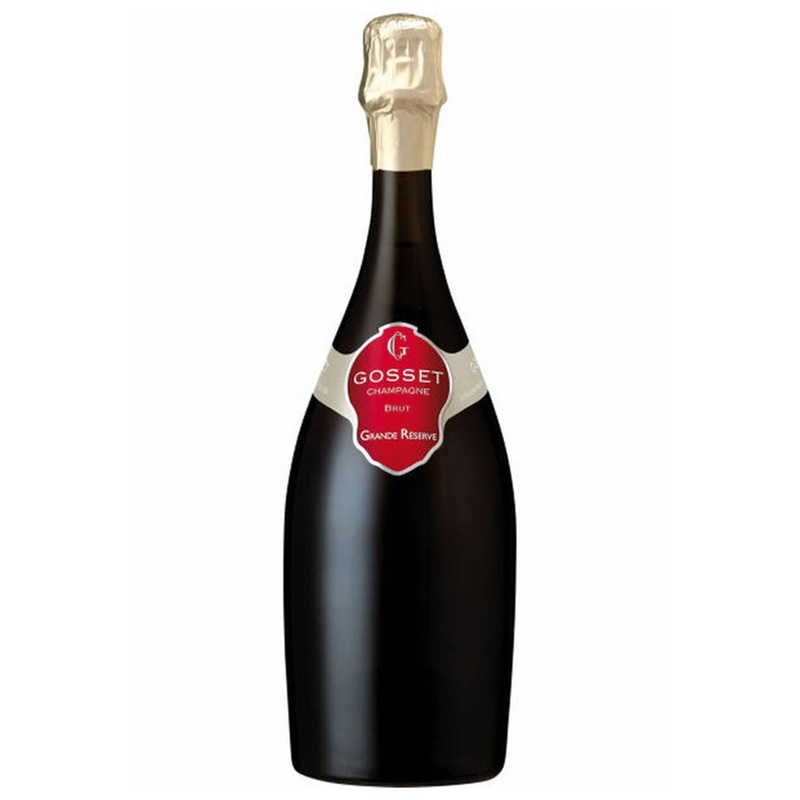
Gosset Grande Reserve Brut is a non-vintage Champagne from France’s oldest wine house, bottled at 12% ABV in a standard 750ml format. Awarded 93 points by Stephen Tanzer and 92 points from Wine Spectator, this cuve stands out for Gosset’s deliberate avoidance of malolactic fermentation a practice that preserves bright malic acidity and gives the wine uncommon freshness and aging potential.
Quick Facts: ABV: 12% | Origin: Champagne, France | Non-Vintage Brut | Producer: Champagne Gosset (est. 1584)
Production & Heritage
Champagne Gosset was founded by Pierre Gosset in 1584 in the village of A, making it the oldest wine house in the Champagne region. Grande Reserve Brut is assembled from 45% Chardonnay, 45% Pinot Noir, and 10% Pinot Meunier, sourced from premier cru and grand cru vineyards across the Cte des Blancs, Grande Valle de la Marne, and Montagne de Reims. Each grower lot is vinified separately, and critically Gosset bypasses malolactic fermentation entirely. While most Champagne houses use MLF to soften acidity, Gosset retains the natural malic acid from the grapes, producing a wine with sharper definition, greater tension, and a longer trajectory in bottle. The mthode champenoise is followed for secondary fermentation, with extended lees aging contributing the toasty, brioche-like complexity that distinguishes this cuve.
Tasting Notes
Aroma: The nose opens with ripe yellow apple and Granny Smith highlights, followed by apricot, fresh walnuts, and subtle autolytic notes of pie crust. A whisper of white pepper and ginger lingers beneath the fruit.
Taste: On entry, the mousse is fine and lacy, delivering a well-meshed range of black currant, apricot, and lemon curd flavors. The mid-palate turns creamy with layers of toasted brioche and Mirabelle plum, supported by a vivid backbone of acidity that keeps everything taut. Pink grapefruit pith and grated ginger emerge at peak intensity, balanced by a subtle mineral thread of oyster shell and chalk.
Finish: The finish is sleek and persistent, carrying hints of smoke, candied ginger, and honeycomb. Fine citrus and chalk-driven minerality echo through a long, mouthwatering close.
How to Drink Grande Reserve
Grande Reserve shows its full complexity when served slightly warmer than most sparkling wines around 1012C rather than ice cold which lets the layered fruit and brioche character emerge. It works beautifully as an apritif on its own. For cocktails, try it in a French 75, where its citrus spine and lack of MLF softness keep the drink crisp against gin and lemon; a Champagne Cocktail (with an Angostura-soaked sugar cube), where the wine’s toasty depth meets bitters beautifully; or a Kir Royale, where its firm acidity cuts through crme de cassis without losing structure.
Best For
- Gifting a wine enthusiast who values history and heritage Champagne’s oldest house carries real weight
- Hosting a dinner party where the Champagne must hold up from apritif through a first course
- Celebrating milestones with a critically acclaimed non-vintage Champagne that overdelivers for its tier
- Building a Champagne education around the effects of malolactic fermentation
Frequently Asked Questions
What does Grande Reserve taste like? Grande Reserve leads with ripe apple, apricot, and lemon curd, layered over toasted brioche and mineral notes of chalk and oyster shell. Its defining trait is a bright, mouthwatering acidity the result of skipping malolactic fermentation balanced by a fine, creamy mousse.
How does Grande Reserve compare to Pol Roger Brut Reserve? Both are non-vintage Champagnes blending the same three grape varieties from high-quality vineyard sources, but Gosset’s avoidance of malolactic fermentation produces a noticeably more structured, acid-driven profile. Pol Roger Brut Reserve tends toward a rounder, more immediately approachable style due to its use of MLF.
Is Grande Reserve good for sipping neat? Absolutely its complex aromatics, layered fruit, and firm acidity reward careful attention without any cocktail embellishment. Serving it on its own at a cool 1012C is arguably the best way to appreciate its full character.
Where is Grande Reserve made? Grande Reserve is produced by Champagne Gosset, founded in 1584 in the village of A in the Champagne region of northeastern France. The fruit is sourced from premier cru and grand cru vineyards across the Cte des Blancs, Grande Valle de la Marne, and Montagne de Reims.
What foods pair well with Grande Reserve? Oysters and raw shellfish are a natural match, echoing the wine’s mineral, chalky undertones. Aged Comt or Gruyre bridges the toasty brioche notes. Smoked salmon or seared scallops complement the creamy mousse and citrus acidity. Chicken in a lemon-butter sauce mirrors the wine’s fruit and richness, while almond tart or apple galette align with its baked-bread and orchard-fruit character.
What sizes does Grande Reserve come in? Gosset Grande Reserve Brut is widely available in the standard 750ml bottle, with magnums (1.5L) and half-bottles (375ml) also produced depending on market availability.
Is Grande Reserve worth the price? Grande Reserve positions as a premium non-vintage Champagne above entry-level supermarket labels but well within the range of serious grower and grande marque cuves. The combination of grand cru and premier cru fruit, no-MLF winemaking, and consistently strong critical scores (93 points Stephen Tanzer, 92 points Wine Spectator) make it a strong value within that tier.
Why Grande Reserve?
The single most important thing to know about Gosset Grande Reserve is that it comes from a house that has refused to follow the malolactic convention and that decision defines every sip. Where most non-vintage Champagnes smooth their edges through MLF, Gosset preserves the raw malic acidity of the fruit, resulting in a wine with real backbone and exceptional longevity for its category. Backed by a 440-year winemaking heritage and consistently scoring 9293 points across major publications, Grande Reserve demonstrates that non-vintage Champagne can deliver genuine complexity. For anyone who finds mainstream NV Champagne too soft or one-dimensional, this is the bottle that changes the conversation.
Reviews
There are no reviews yet.