
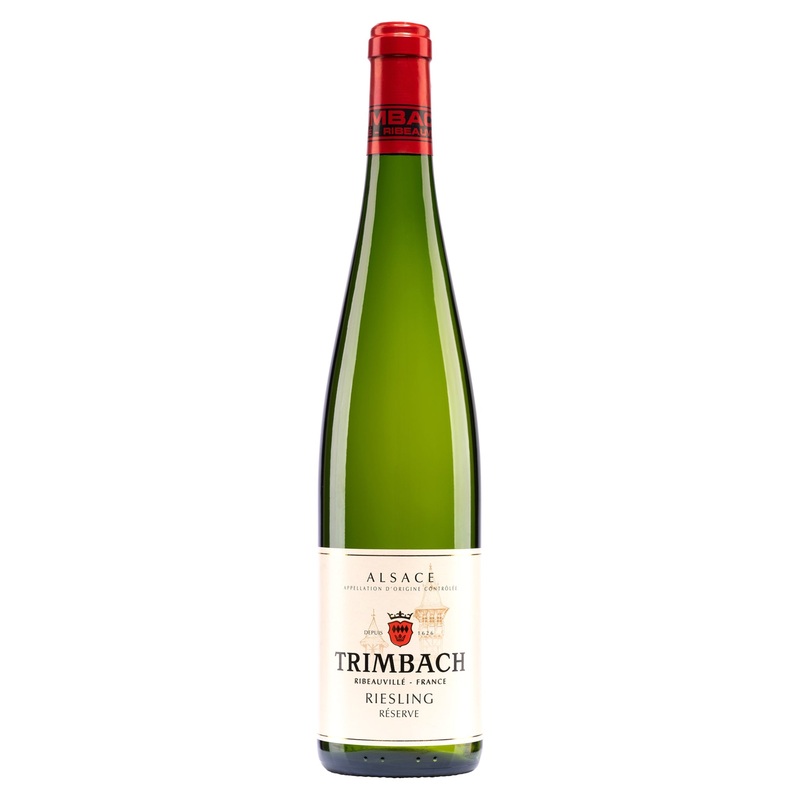
Description
PractisingOrganicVariety:RieslingCountry, Region:France,AlsaceAppellation:Alsace
The Reserve Riesling is made up of older vine material, averaging around 45-50 years, taken from the estates vineyards in Ribeauvill and Bergheim, including the Grand Cru of Altenberg de Bergheim and the lieu-dits of Hagueneau and Pflaenzer. The fruit is crushed and pressed then fermented in stainless steel tanks. In line with the houses fresh and vivacious style, the wine does not undergo malolactic conversion or long lees maturation. 12.94% Alc/Vol; 5.3 g/L RS; 9.09 g/L TA, pH 3.04.
This elegant, medium-weight dry riesling is brimming with white tree fruit aromas plus notes of spring blossoms and garden herbs. You cant fault it for charm, but neither can you for balance and structure. Long and bright citrusy finish. From old vineyards in Ribeauville and Bergheim. From organically grown grapes. Drink from release. 93 points, Stuart Pigott, jamessuckling.com, March 2023.
‘Trimbach is at the summit of dry white winemaking.’Clive Coates M.W.
‘Clos St Hune, the Alsace Riesling by which all others are judged.’Andrew Jefford.
With viticultural origins going back to 1626 this family owned estate produces some of the finest wines not only of Alsace, but indeed the entire world of wine. Around the villages of Ribeauvill and Hunawihr, the Trimbach family owns 27 hectares of vineyards including 1.67ha of Rosacker Grand cru (which produces the highly famed Clos Sainte Hune Riesling) as well as parcels of Geisberg and Osterberg (blended to make the equally renowned Riesling Cuve Frdric Emile). Geisberg and Osterberg are located on the hill rising up behind the new family winery on the edge of Ribeauvill. The family moved from their old winery in Hunawihr in the 1890s! Indeed, the label of Clos Sainte Hune depicts the view to the local church from the old winery in Hunawihr.
According to Jean Trimbach, the house style is aiming for harmonious wines that are concentrated, not heavy; fruity, not sweet; bracing rather than fat; polite rather than voluptuous. To that end, fermentations are cool and slow, maloloactic fermentation is not carried out and the wines are bottled early to retain freshness.
The dry Rieslings are usually made with less than 5g/l of residual sugar, whereas the dry Gewrztraminers might carry up to 10g/l. The wines are then aged in the cellar for at least one year; up to 5 years or more for the top wines. Even the richer Vendanges Tardive and Selection de Grains Nobles wines are made with more restraint than is usual in Alsace more generally: VT Rieslings typically carry 15-40g/l; VT Gewrztraminer around 50-75g/l; and SGN typically from 100g/l.
Reviews
There are no reviews yet.